Showing posts with label furniture. Show all posts

Citroën exhibits an exclusive Airbump-inspired piece of furniture at the 2016 Milan Design Week – the Cactus Chair.


At 55th edition of the Salone del Mobile.

Developed by the renowned Italian architect and designer Mario Bellini, this work of art is directly inspired by the technology Airbump® C4 Cactus. The "Cactus Chair" perfectly reflects the will of the Citroën brand to combine purpose and aesthetics through a design chair, comfortable and light.
 
The design is contagious. They will explain what the architect Mario Bellini, Alexander Malval, director of Citroën design center and Angelo Simone, director of the Citroën brand in Italy to the presentation of the Cactus chair.
During the Milan Design Week, Cactus Chair is exhibited in Benetton windows in Piazza Duomo, at Tribute to Domus celebrating the thousand issues of the magazine. To celebrate the spirit that unites Domus and United Colors of Benetton, the ten store windows UCB host a special display created by Fabrica. Seventeen icons of dialogue design with Pantone Year 2016, and with the collection Spring Summer brand, in an exaltation of color in all its forms
Citroen has amazed with his creativity in the automotive world by developing Airbump®: the exclusive protection of the C4 Cactus body where style, technology and functionality blend together to create a design object. Similarly, Mario Bellini has been working on a new chair inspired by the concept of these extraordinary protection elements.
Citroën’s Airbump technology uses a supple skin in TPU (thermo-plastic urethane) to protect the car’s bodywork against knocks and scratches in everyday use. It encloses a multitude of air capsules and requires no particular maintenance.

'Carrier and housing, seat and chair, door and door, roof and roof, window and window. How many words shared between the space of a car and that of a house. That must be why when Citroën Italy took me in the studio, like a "technological trophy" the Airbump® the first idea I had was touching him: why not imagine that further meeting a lightness and economy of a plastic chair also add the convenience of a real padding? 
This innovative creation find themselves two experts in the use of polymers, as well as two icons of world design: Citroën and Mario Bellini.
 Citroën E-MEHARI styled by Courrèges — is the outcome of meticulous work on colours and materials. 
There’s a predominant emphasis on white, with accents in bright orange, creating, says Citroën “a refreshing sense of freedom, expressed through functionality and space”.Leveraging the air between both dell'Airbump® flexible shells, an air spring, perfect cushioning, was born in a chair by the paradoxical name: Cactus Chair. From the car to the cabinet. "
CL_16.021b.jpg
A distinctive design feature is the “Airbump” panels on the car's sides, designed to protect the vehicle from damage in car parks
11 to 17 April 2016 
Cactus Chair. The car is moving.
Brings in with excitement at Garage Tortona 
Via Tortona 20, Milan

art of origami


Arik levy’s rama chair for palau draws on the art of origami, featuring subtle folds

arik levy palau rama chair designboom

Profile views of the ‘rama’ chairs architectural structure,‘rama’ is an architectural, tri-dimensional seating piece whose subtle folds and faceted surface reference origami and the japanese art of paper folding.Designed by arik levy ‘rama’ is composed of a series of plane surfaces juxtaposed in space side by side, creating an uninterrupted and smooth form — a sort of intimate, personal alcove.The armchair is composed of a double-skin construction that has an external layer of comfort giving it a dynamic look, thus making it easy to integrate into a contemporary, or classic interior. Without compromising coziness and function, ‘rama’ has a swivel base that offers additional flexibility; and maintains an appearance that is non-invasive, but sculptural and elegant. 
arik levy palau rama chair designboom

‘rama’ is characterized by subtle folds in its surface which reference the art of japanese paper foldingarik levy rama palau designboom

'rama' chair prototype
cardboard model

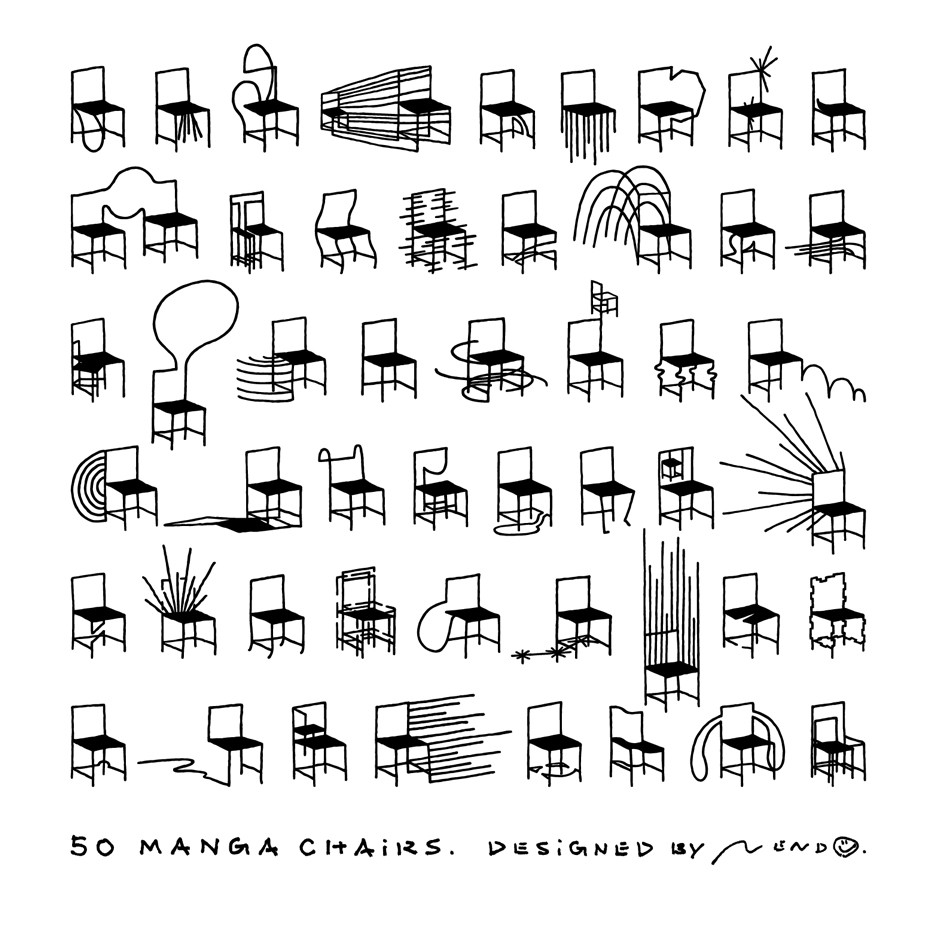
Japanese Manga chairs - Nendo designs

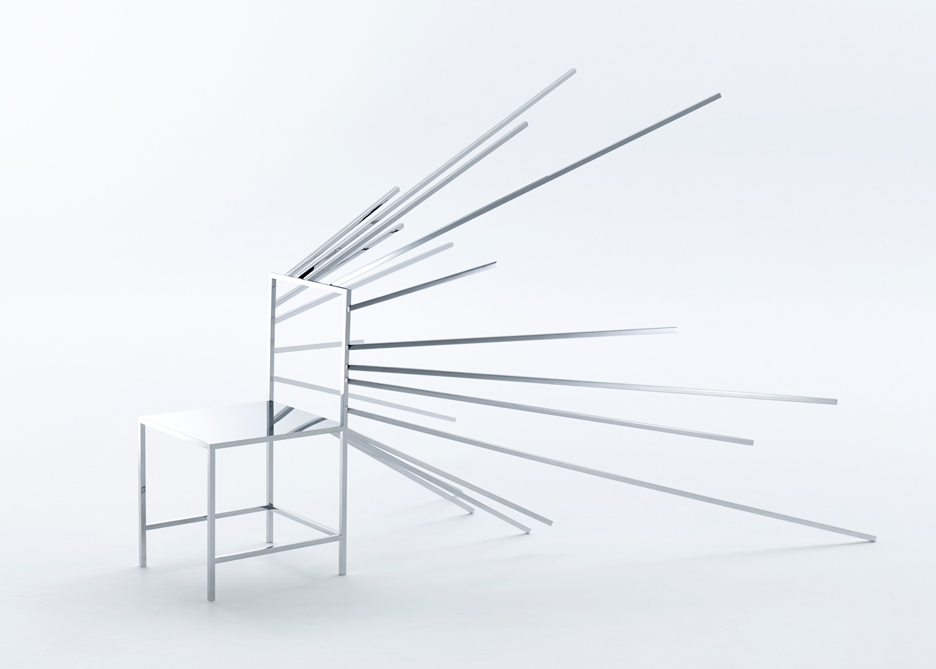
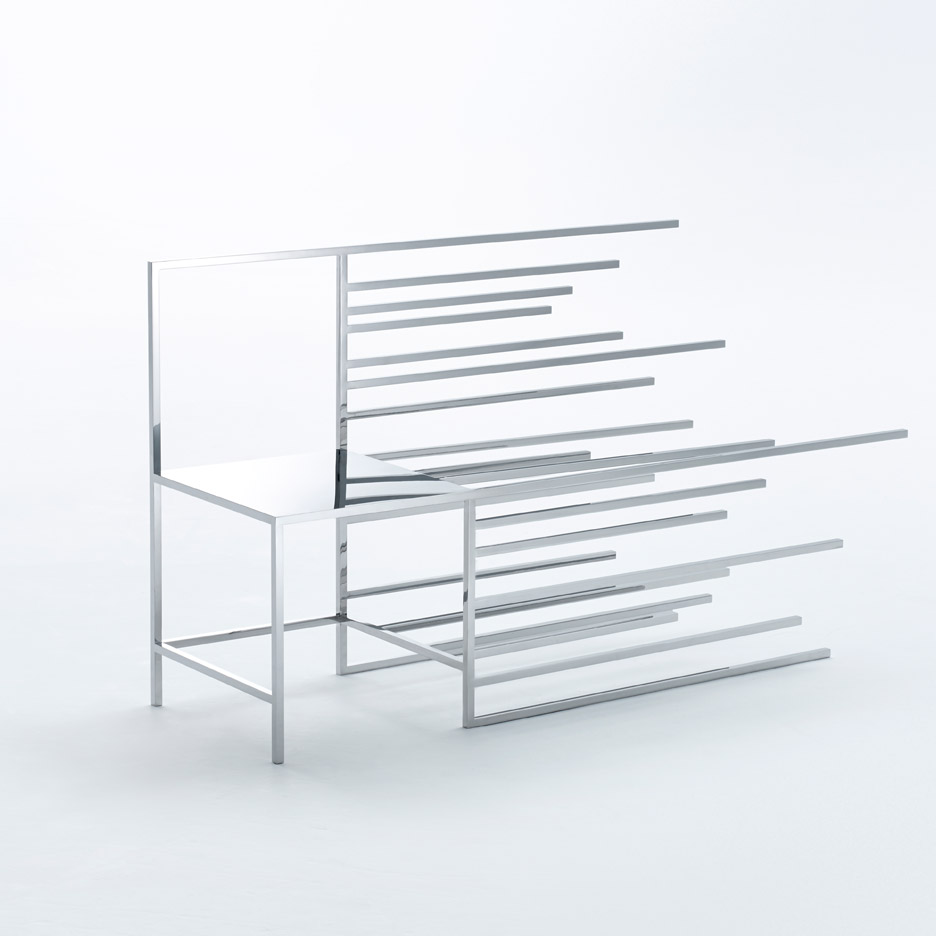
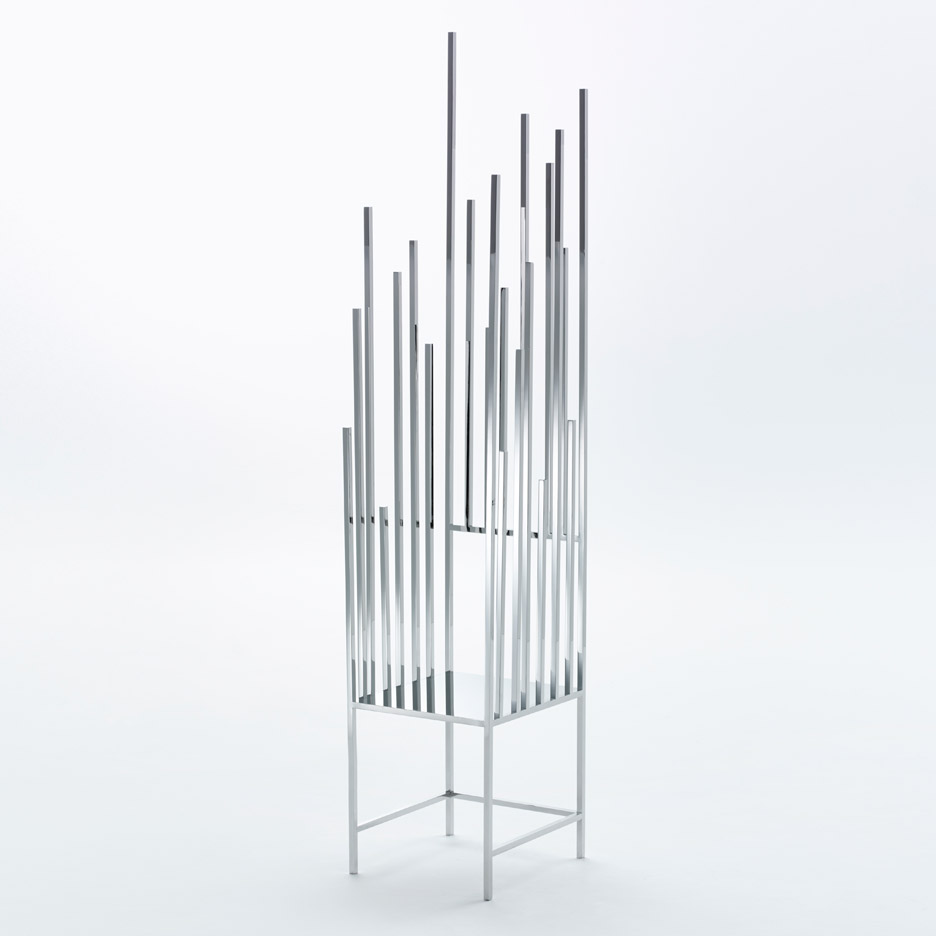
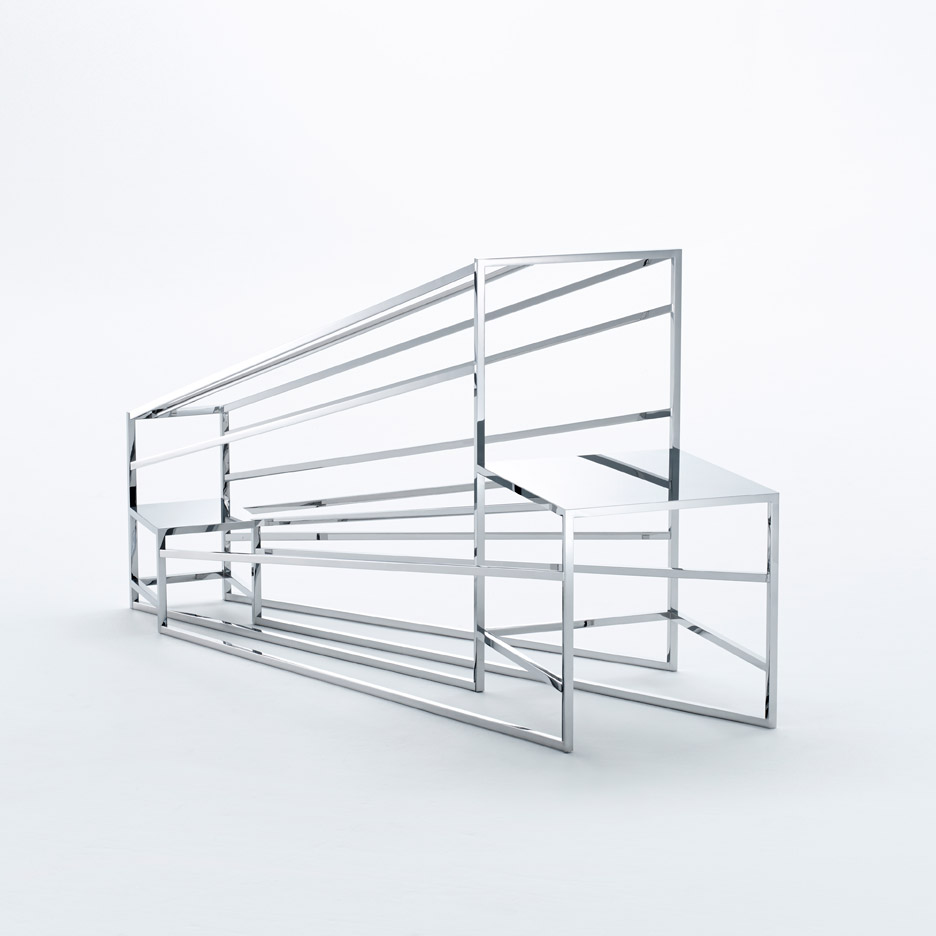
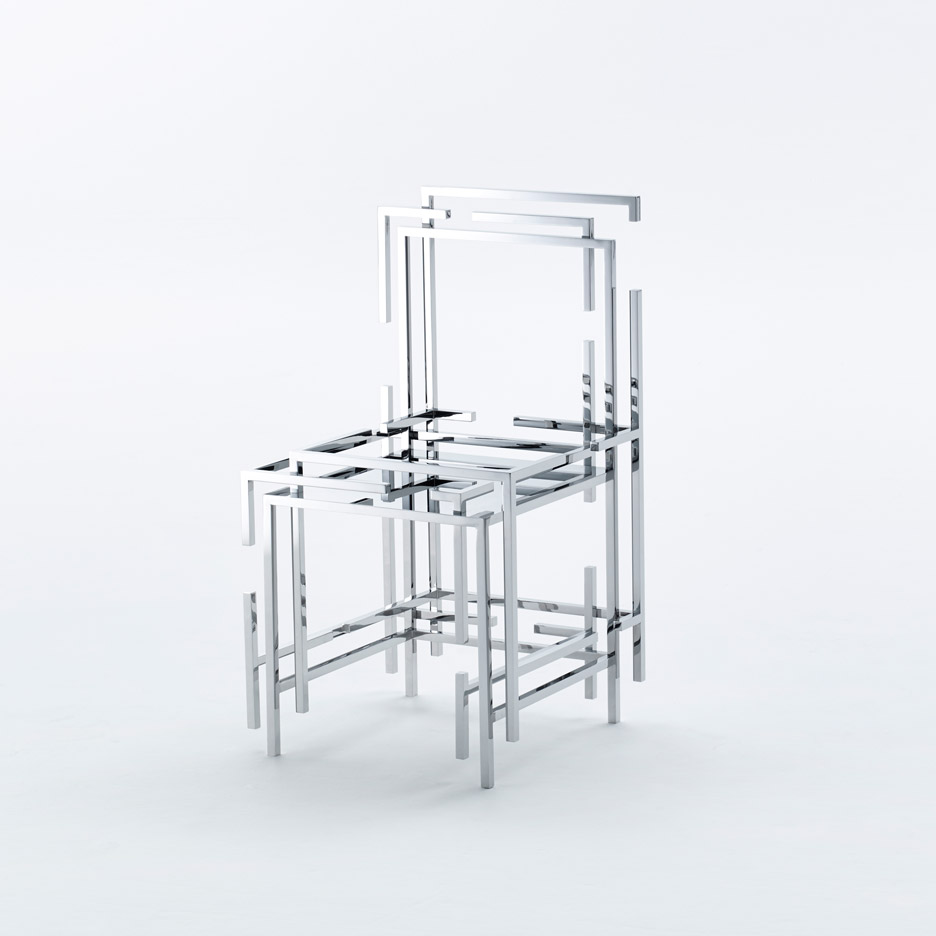
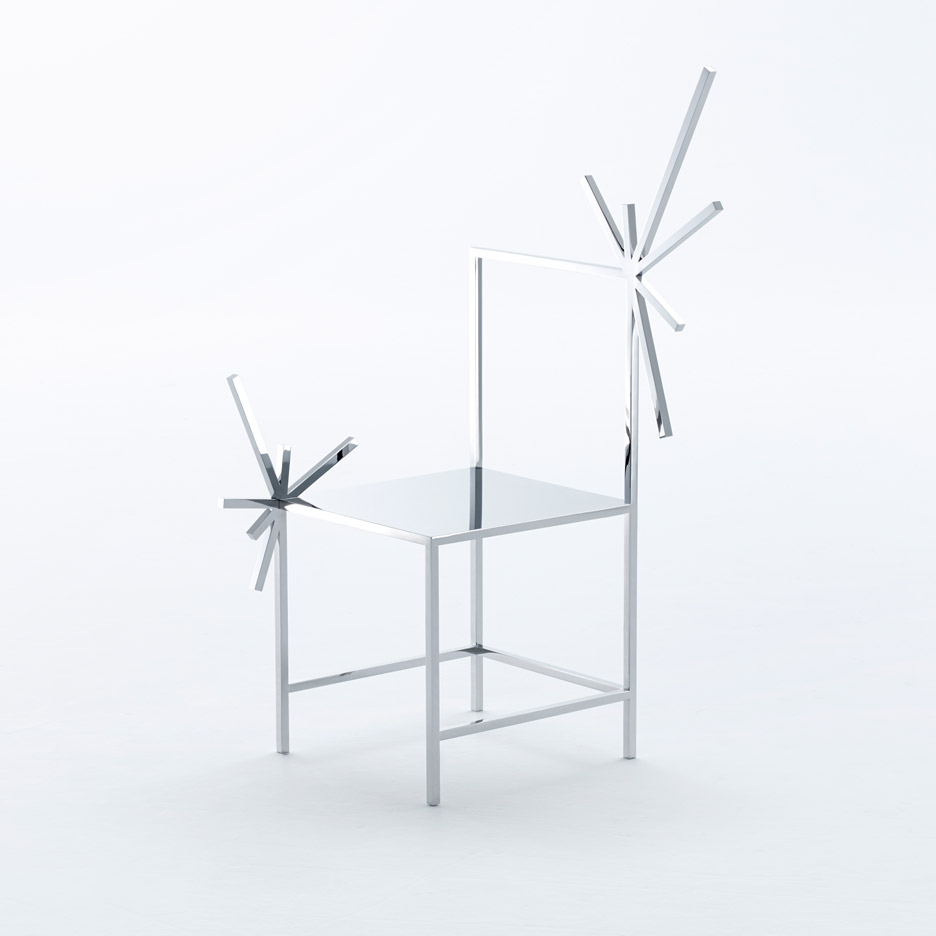
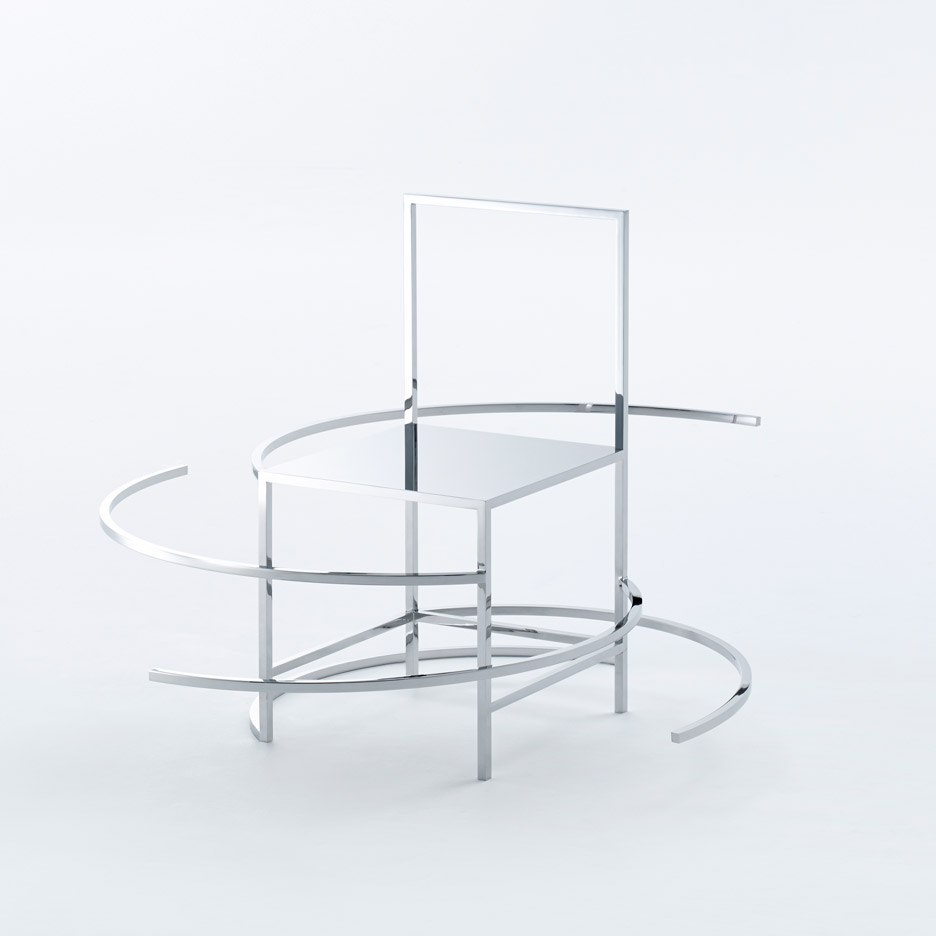
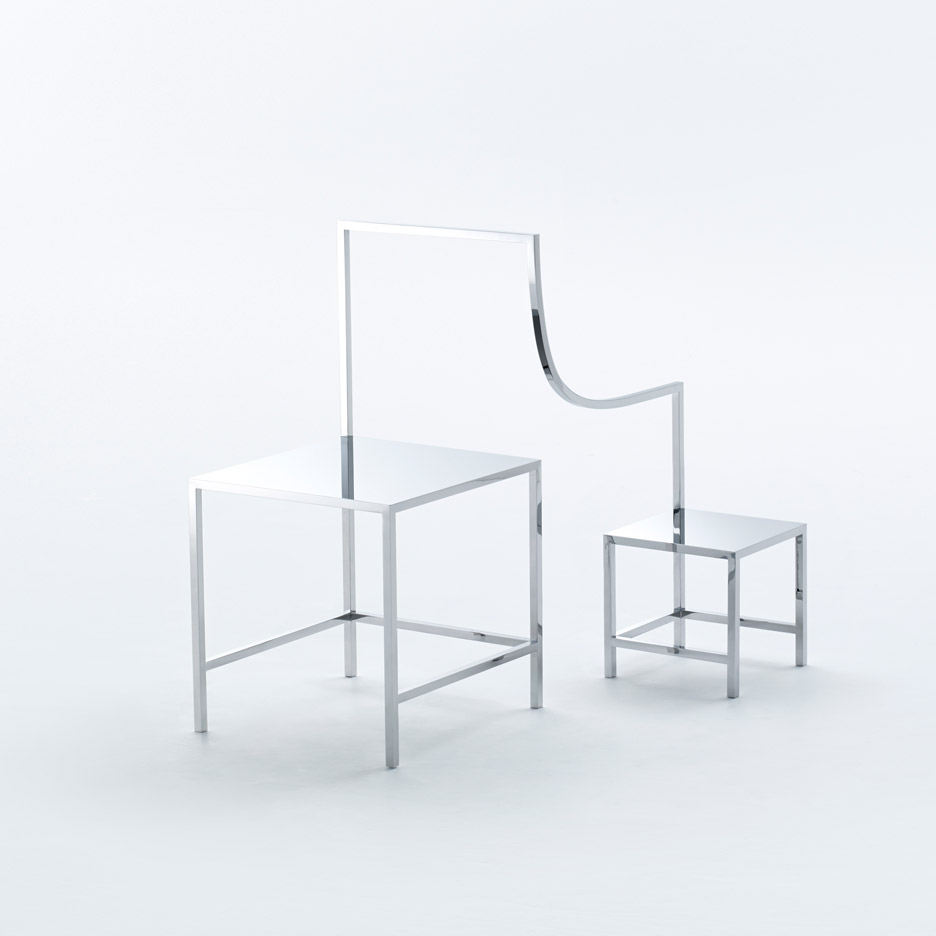
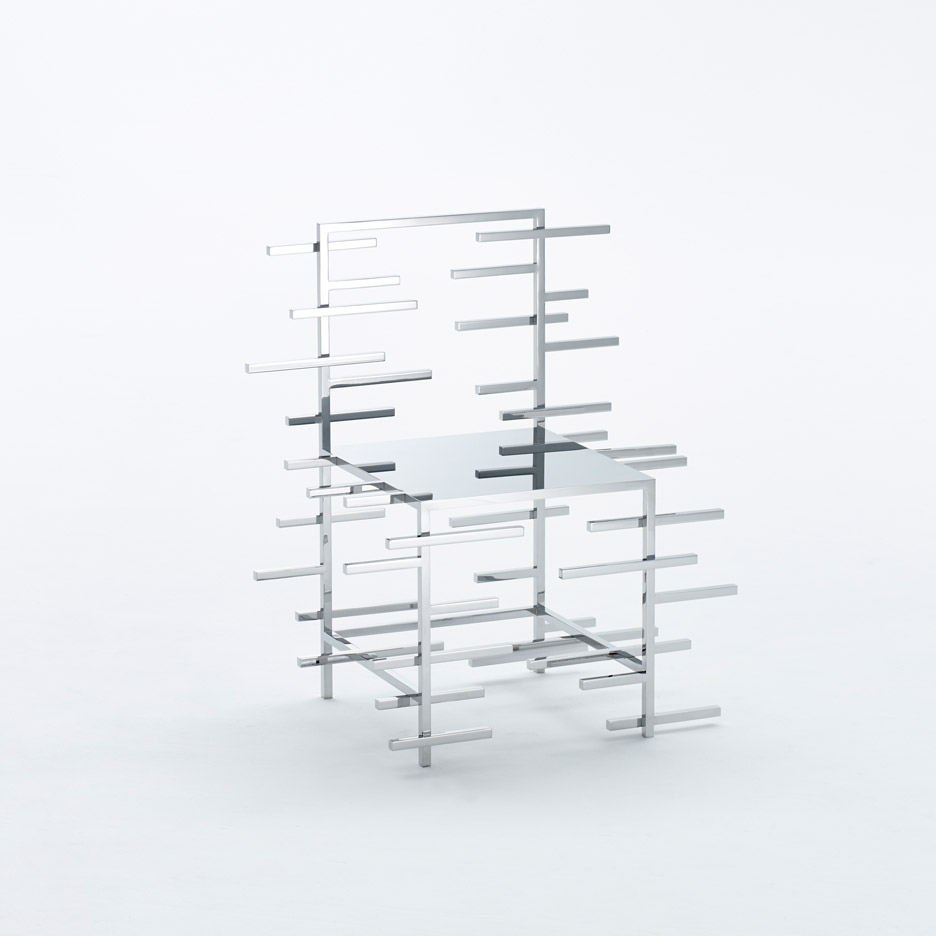
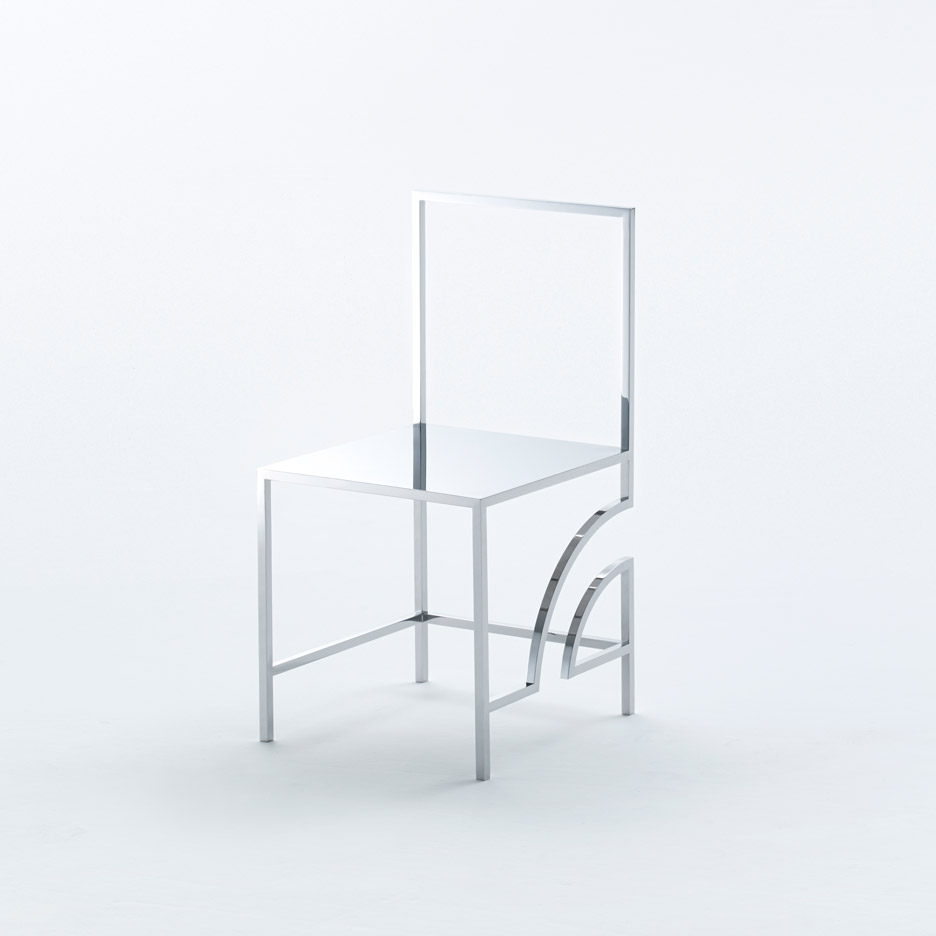
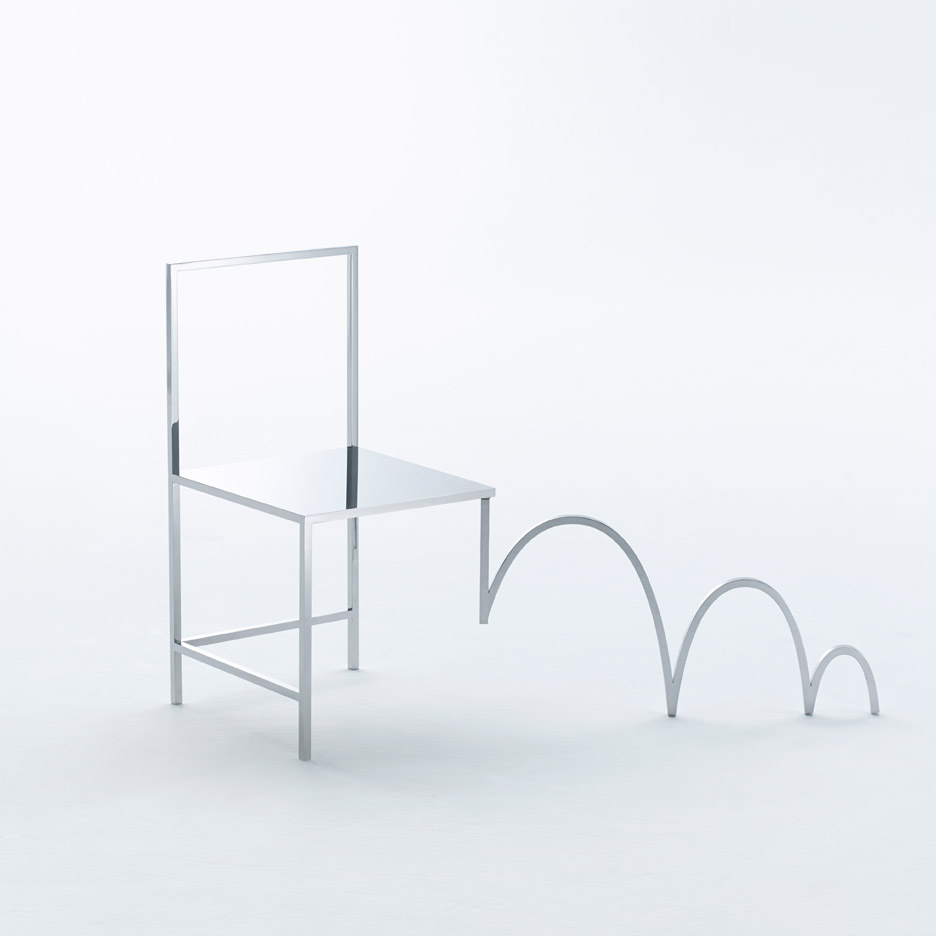
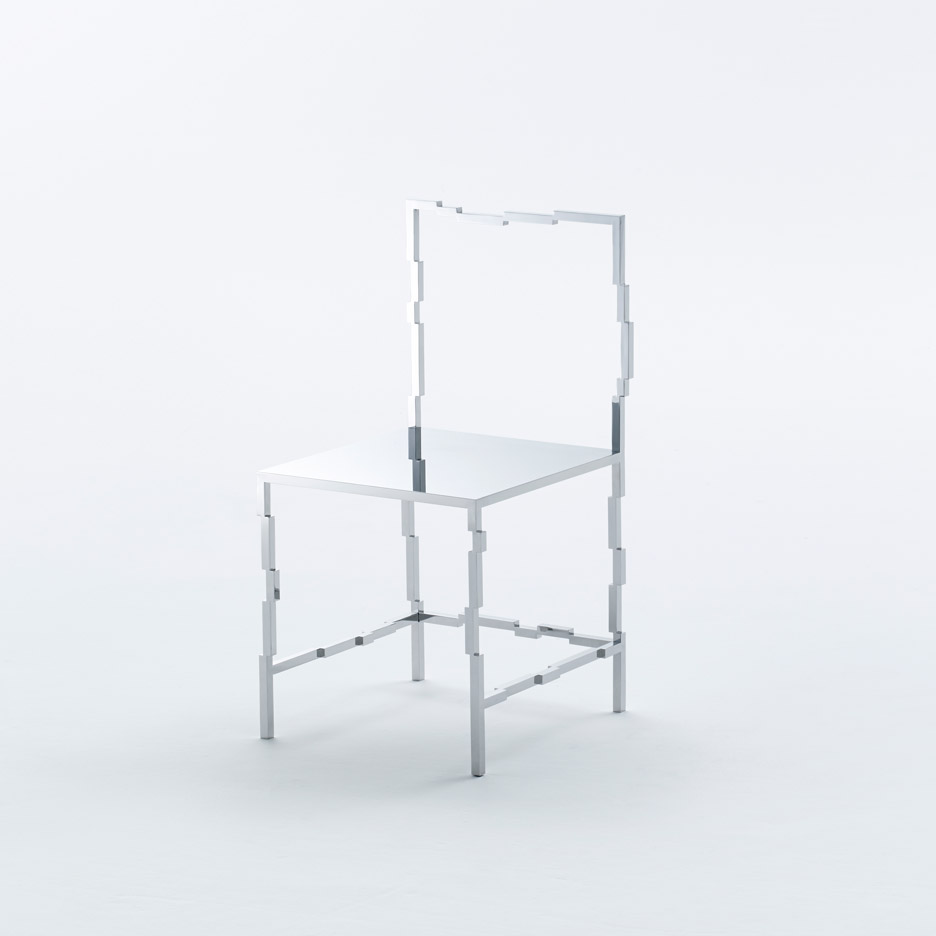
Japanese design studio Nendo has created a series of 50chairs, which are each based on the abstract lines and grids used in graphics for manga-style comic books.
Manga chairs by NendoEach chair in the Manga collection is made from polished stainless steel, and is intended to emulate a design element used to illustrate emotions or actions in stories.Manga chairs by NendoAn effect line – a series of lines often used to visualise sound or action – is presented through a chair with numerous poles protruding from its back.Manga chairs by NendoManga is a style of comic books and graphic novels, typically aimed at adults as well as children, which conform to a style developed in Japan in the late 19th century.Manga chairs by Nendo"Manga is a means of expression with a high degree of flatness and abstraction, and which is composed of a series of lines," said Nendo. "We could say that manga comics are deeply rooted in Japanese culture, since they can be traced back to Ukiyoe prints developed during the Edo period in 1603 to 1868."Manga chairs by Nendo"Manga consist of a series of frames on a single sheet of paper that creates a sequence," the studio added. "Similarly, 50 standard chairs are lined up in a grid, each one conjures up a sense of story, and each with a design element from manga."Manga chairs by Nendo
In a similar way to the comics, physical aspects such as colour and texture are intentionally avoided. instead, the designers opted for a complete mirror finish.Manga chairs by Nendo"The mirror finish generates new spatial layers as the mirror surface reflects the real world, just like manga does," said the designers.Manga chairs by NendoThe 50 Manga chairs will be presented as an installation for Friedman Benda gallery, New York at the Facoltà Teologica dell'Italia Settentrionaleduring Milan design week, which takes place from 12 to 17 April 2016.Manga chairs by NendoNendo – led by designer Oki Sato – is well known for its vast annual output of products, interior design and architecture projects. Manga chairs by Nendo"I can't keep up," he said. "The more ideas I think of, the more ideas I come up with. It is like breathing or eating."Manga chairs by NendoThe Japanese studio's most recent projects include design to complement minimal interiors, and a squidgy cube that acts as an umbrella stand.


nendo-sketch-dezeen-manga-chairs
Concept sketch 
Nendo never ceases to amaze me. Yet another example of perfect execution.These chairs are structurally more daring and visually more striking 

Billy bookcase, Gillis Lundgren, the designer who transformed Ikea in the 1950’s


Gillis Lundgren, an industrial designer who helped make Ikea the largest furniture retailer in the world with his no-frills designs, most notably the Billy bookcase that millions of frugal book collectors have used to build their home libraries, has died at 86.

Mr. Lundgren joined Ikea in 1953 as the company’s fourth employee and advanced to become its first design manager. A draftsman with training in graphics, he designed hundreds of Ikea’s simple, portable furnishings and was credited with creating the company logo, whose blue and yellow colors were taken from the Swedish flag.Every year hundreds of millions of shoppers visit Ikea stores in pursuit of the economical establishment of a household.


Mr. Lundgren joined Ikea in 1953 as the company’s fourth employee and advanced to become its first design manager. A draftsman with training in graphics, he designed hundreds of Ikea’s simple, portable furnishings and was credited with creating the company logo, whose blue and yellow colors were taken from the Swedish flag.Every year hundreds of millions of shoppers visit Ikea stores in pursuit of the economical establishment of a household.

                                          http://www.ikea.com/assembly_instructions/billy-bookcase--202-cm__JXQ13_PUB.PDF
ikea-billy bookshelf proportions 


“I want to create solutions for everyday based on people’s needs,” Australian newspapers quoted him as saying. “My products are simple, practical and useful for everyone, no matter how old you are or what your life situation.”Gillis Lundgren was born in Lund, in southern Sweden, in 1929. He studied at the Malmo technical college and joined Ikea as a catalogue manager. A complete list of his survivors could not immediately be confirmed.He was credited with designing or helping design the vaguely mid-century modern Klippan sofa and Lövbacken table, originally sold in the 1950s under the name Lövet. Ikea product names, with their profusion of umlauts and unfamiliar sounds such as Ektorp Jennylunda chair) and Magnarp (a lamp), are the subject of cult fascination. (The company’s name is an acronym made from the initials of its founder, I.K., followed by the first letters of the names of the farm, Elmtaryd, and the town, Agunnaryd, where he grew up.) The Billy, one of the simpler words in the Ikea lexicon, was reportedly named for Billy Liljedahl, an advertising colleague of Mr. Lundgren’s who had expressed a desire for a “bookcase just for books.”


According to Quartz, Ikea produces 15 Billy bookcases per minute and had sold more than 41 million sets by 2009, after Billy turned 30 — the age at which some Billy owners may choose to graduate to a higher-end library. Many used Billy bookcases find their way to new homes, by way of Craigslist or as family hand-me-downs.

“I’m particularly happy that Billy has made it possible for so many people to build their own little library,” Mr. Lundgren once said. “In the old days, books were quite uncommon in most homes. These days, everyone has books, which is as it should be.”